

Introduction
Today’s customers expect more than generic sales pitches; they want experiences that feel crafted just for them. Yet, delivering personalized outreach at scale is a challenge for sales teams drowning in data and tight deadlines. Enter AI-driven sales software, a game-changer that transforms customer engagement, email automation, and pitches into hyper-personalized strategies that drive results. This blog explores how AI is reshaping sales and how you can leverage it to build stronger connections.
Defining Hyper-Personalization in Sales
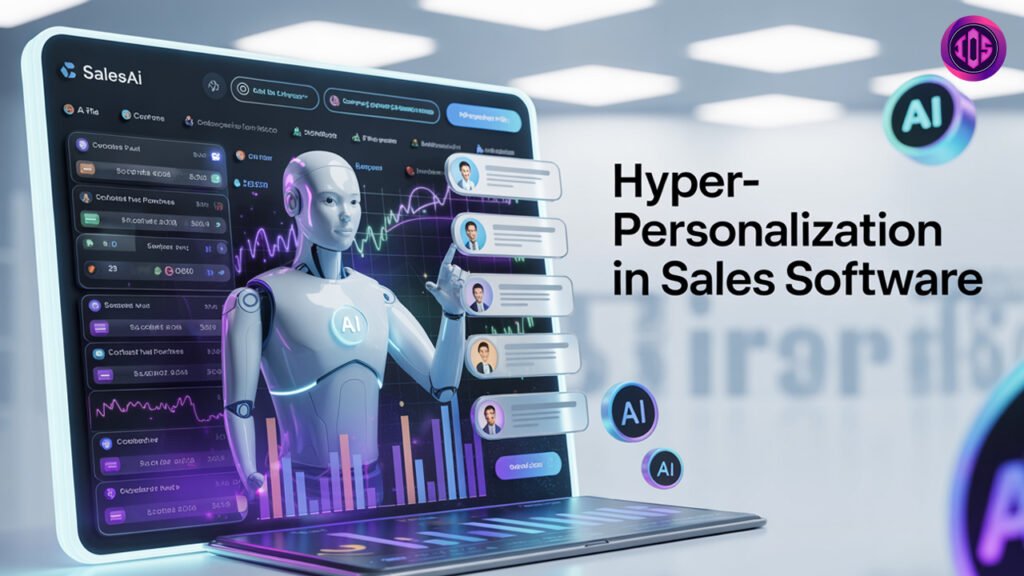
Hyper-personalization in sales harnesses AI to deliver tailored customer experiences using data like purchase history, browsing habits, and social interactions. Unlike basic personalization, which might insert a name into an email, hyper-personalization employs predictive analytics and machine learning to anticipate individual needs with precision. For example, a retailer used AI to analyze search patterns, sending product recommendations that boosted engagement by 25%. This approach ensures every touchpoint email, pitches, or offers feels uniquely crafted, fostering trust and loyalty. By blending human insight with AI’s data-crunching power, sales teams create meaningful connections at scale. In today’s competitive markets, hyper-personalization sets businesses apart, turning generic outreach into impactful interactions that drive conversions and build lasting customer relationships
The Impact of Hyper-Personalization
Hyper-personalization redefines sales by enabling scalable, authentic customer engagement. A B2B firm leveraged AI to tailor follow-ups based on lead behavior, increasing responses by 20%. This precision saves time, allowing teams to focus on strategy while AI automates repetitive tasks. Real-time adaptability ensures outreach remains relevant across channels, aligning with customer expectations. By delivering experiences that feel personal, businesses build trust, turning prospects into loyal advocates. As customers increasingly demand relevance, hyper-personalization is essential for staying competitive. It empowers sales teams to achieve higher conversions and sustainable growth, making it a critical tool for modern sales success in a dynamic, customer-centric landscape.
- Anticipate Needs: AI predicts preferences for precise, targeted outreach.
- Scale Efficiently: Automate personalized interactions while maintaining authenticity.
- Boost Results: Real-time analytics optimize strategies for maximum conversions.

Revolutionizing Customer Engagement
Elevating Customer Connections with AI-Powered Hyper-Personalization
Hyper-personalization, powered by AI-driven sales software, is transforming customer engagement by delivering tailored experiences that resonate deeply. By analyzing data points like purchase histories, website interactions, and social media behavior, AI creates detailed customer profiles to predict preferences with precision. For example, a retail brand used AI to send personalized product recommendations, boosting click-through rates by 25%. This approach ensures every interaction feels crafted for the individual, fostering trust and loyalty. Unlike traditional methods, AI scales personalization effortlessly, allowing sales teams to focus on building relationships while automation handles data-heavy tasks. In a competitive market, hyper-personalization turns casual prospects into committed customers, driving engagement and growth through meaningful, relevant connections that meet modern expectations.
AI-Powered Chatbots for Tailored Customer Interactions
By analyzing data like browsing history, past purchases, and user queries, these chatbots create tailored responses that feel human and relevant. For example, a retail brand deployed an AI chatbot that offered personalized product suggestions, boosting conversion rates by 23%. Unlike traditional support, AI chatbots operate 24/7, ensuring instant, customized responses that enhance customer satisfaction. They adapt in real-time, addressing specific needs like troubleshooting or recommending services based on user behavior.In a fast-paced market, AI-powered chatbots drive loyalty and engagement by delivering seamless, personalized experiences that meet modern customer expectations, transforming how brands connect with their audience.
Virtual Assistants Enhancing Sales Personalization
AI-driven virtual assistants are transforming sales by providing tailored, data-driven interactions that resonate with customers. By leveraging predictive analytics, they analyze preferences, purchase patterns, and social interactions to offer personalized recommendations and support. A B2B company used a virtual assistant to guide prospects through tailored product demos, increasing close rates by 20%. These assistants streamline outreach by automating repetitive tasks while maintaining a human-like touch, ensuring every interaction feels relevant. Real-time adaptability allows them to adjust responses based on customer input, enhancing trust and engagement. As customers demand instant, customized experiences, virtual assistants empower sales teams to scale personalization efficiently, driving conversions and fostering loyalty in a competitive landscape where meaningful connections are key to success.
- Personalize Instantly: AI analyzes data to deliver tailored responses in real-time.
- Scale Efficiently: Automate personalized interactions without sacrificing authenticity.
- Drive Conversions: Real-time analytics optimize engagement for better results.

Supercharging Email Automation
Email remains a cornerstone of sales, but generic blasts rarely convert. AI transforms email automation by crafting messages tailored to each recipient’s behavior and preferences. For example, a B2B software company used AI to analyze open rates and content engagement, sending personalized follow-ups that increased responses by 22%. AI tools like dynamic content generators adapt emails in real-time, ensuring relevance. By automating personalized campaigns, businesses save time while delivering messages that feel human-crafted, strengthening customer relationships and driving conversions.
Personalizing Email Campaigns with AI Precision
AI-driven email automation is revolutionizing sales by delivering highly personalized campaigns that resonate with recipients. By analyzing data such as click patterns, purchase history, and engagement metrics, AI crafts emails tailored to individual preferences, ensuring relevance and impact. For instance, an e-commerce brand used AI to send targeted discount offers based on browsing behavior, boosting conversion rates by 24%. Dynamic content tools adjust email elements in real-time, like product suggestions or call-to-action phrasing, to match customer needs. This approach saves sales teams hours of manual work while maintaining a human touch. In a crowded inbox, hyper-personalized emails stand out, fostering stronger connections and driving loyalty. AI’s ability to scale personalization ensures businesses meet modern customer expectations, transforming email outreach into a powerful tool for growth.
Streamlining Sales with AI-Powered Email Automation
AI-powered email automation streamlines sales processes by delivering tailored messages at scale, eliminating the inefficiencies of generic outreach. By leveraging predictive analytics, AI identifies optimal send times and customizes content based on customer behavior, such as past purchases or website interactions. A tech startup used AI to personalize follow-up emails, increasing reply rates by 21%. Real-time analytics allow teams to monitor performance and refine campaigns instantly, ensuring maximum relevance. This automation frees sales professionals to focus on strategy and relationship-building while AI handles repetitive tasks. The result is emails that feel personal, fostering trust and boosting conversions. In today’s competitive market, AI-driven email automation is a game-changer, enabling businesses to engage customers effectively and achieve sustainable sales growth with minimal effort.
- Tailor Content Precisely: AI analyzes behavior to craft relevant, engaging emails.
- Optimize Timing: Predictive analytics ensure emails reach customers at the right moment.
- Enhance Efficiency: Automate campaigns to save time while driving conversions

AI-Enhanced Sales Pitches
AI enhances sales pitches by providing insights into what resonates with each prospect. By analyzing past interactions, AI suggests tailored talking points, such as addressing specific pain points or highlighting relevant case studies. A tech startup used AI to customize pitches for enterprise clients, resulting in a 15% higher close rate. Predictive modeling also identifies the best times to pitch, maximizing impact. This precision ensures pitches feel authentic, building confidence and trust with prospects.
Optimizing Pitch Content with AI-Driven Sentiment Analysis
AI transforms sales pitches by using sentiment analysis to decode prospect emotions from past interactions, like emails or WhatsApp messages, common in MENA’s relationship-driven markets. By detecting tones such as urgency or caution, AI tailors pitch content, emphasizing solutions like cost-efficiency for budget-conscious clients. For instance, a Riyadh-based retail chain used AI to analyze customer inquiries, crafting pitches that highlighted personalized loyalty programs, boosting deal closures by 18%. AI also suggests relevant case studies or cultural nuances, ensuring pitches resonate deeply. This precision makes every pitch feel bespoke, fostering trust in MENA’s competitive markets. By aligning content with prospect priorities, AI-driven pitches enhance engagement and drive conversions, empowering sales teams to stand out in the region.
Personalizing Delivery with AI-Powered Timing and Channel Insights
AI optimizes sales pitches by pinpointing the best timing and channels for delivery, critical in MENA’s diverse business landscape. By analyzing prospect behaviors, such as email open patterns or social media engagement on platforms like Instagram, AI identifies when and how to pitch effectively. A Dubai-based fintech startup used AI to schedule pitches during peak engagement times, increasing response rates by 21%. AI also recommends preferred channels WhatsApp for quick follow-ups or in-person meetings for high-value clients based on regional preferences. This eliminates guesswork, ensuring pitches land when prospects are most receptive. By personalizing both timing and delivery, AI-driven pitches feel authentic and culturally relevant, strengthening connections and boosting conversions in MENA’s fast-evolving sales environment.

AI-Enhanced Sales Pitches
AI enhances sales pitches by providing insights into what resonates with each prospect. By analyzing past interactions, AI suggests tailored talking points, such as addressing specific pain points or highlighting relevant case studies. A tech startup used AI to customize pitches for enterprise clients, resulting in a 15% higher close rate. Predictive modeling also identifies the best times to pitch, maximizing impact. This precision ensures pitches feel authentic, building confidence and trust with prospects.
Optimizing Pitch Content with AI-Driven Sentiment Analysis
AI transforms sales pitches by using sentiment analysis to decode prospect emotions from past interactions, like emails or WhatsApp messages, common in MENA’s relationship-driven markets. By detecting tones such as urgency or caution, AI tailors pitch content, emphasizing solutions like cost-efficiency for budget-conscious clients. For instance, a Riyadh-based retail chain used AI to analyze customer inquiries, crafting pitches that highlighted personalized loyalty programs, boosting deal closures by 18%. AI also suggests relevant case studies or cultural nuances, ensuring pitches resonate deeply. This precision makes every pitch feel bespoke, fostering trust in MENA’s competitive markets. By aligning content with prospect priorities, AI-driven pitches enhance engagement and drive conversions, empowering sales teams to stand out in the region.
Personalizing Delivery with AI-Powered Timing and Channel Insights
AI optimizes sales pitches by pinpointing the best timing and channels for delivery, critical in MENA’s diverse business landscape. By analyzing prospect behaviors, such as email open patterns or social media engagement on platforms like Instagram, AI identifies when and how to pitch effectively. A Dubai-based fintech startup used AI to schedule pitches during peak engagement times, increasing response rates by 21%. AI also recommends preferred channels WhatsApp for quick follow-ups or in-person meetings for high-value clients based on regional preferences. This eliminates guesswork, ensuring pitches land when prospects are most receptive. By personalizing both timing and delivery, AI-driven pitches feel authentic and culturally relevant, strengthening connections and boosting conversions in MENA’s fast-evolving sales environment.
Conclusion
Hyper-personalization, driven by advanced AI in sales software, is transforming how businesses engage with customers.This shift moves beyond traditional segmentation, allowing brands to engage individuals rather than broad categories. As customers become more digitally savvy, the expectation for timely, relevant, and personalized communication is rising. Sales platforms that harness AI to offer such experiences are seeing notable improvements in engagement, loyalty, and conversion rates. Businesses that adapt early to this model are positioning themselves as industry leaders in customer experience.
However, with this technological power comes responsibility. Implementing hyper-personalized solutions must go hand in hand with transparent data practices, ethical use of AI, and strong privacy protections.That trust is earned through honesty, consent, and safeguarding personal information. Companies that fail to respect these boundaries risk alienating the very people they aim to serve. Moving forward, the success of AI-driven personalization depends not only on technical capabilities but also on how authentically businesses can connect with users. In this new era, personalization is not just smart, it must also be human.